
Rollout of the Second Set of Statutory Forms under Income Tax Rules, 2026
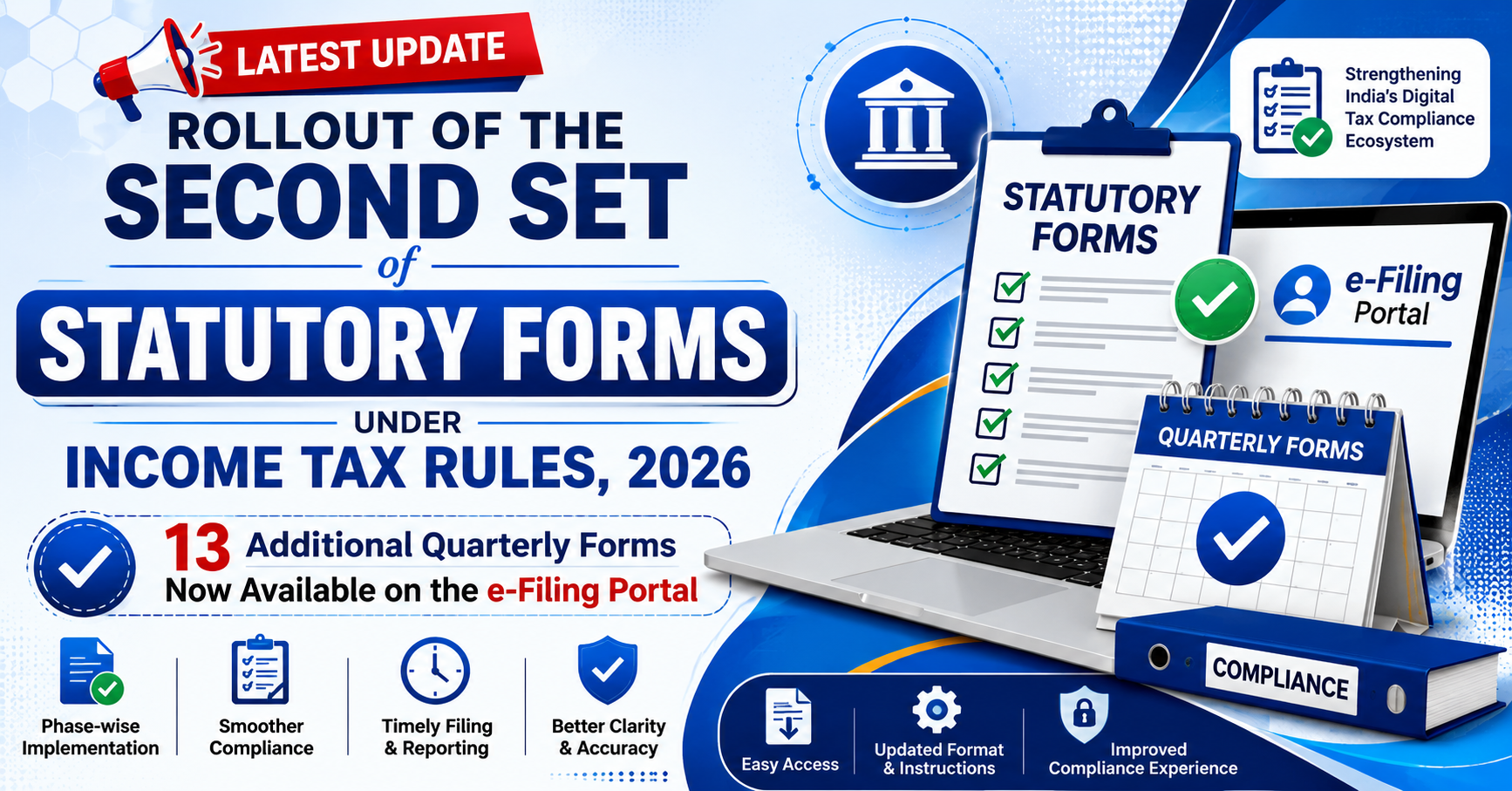
The implementation of the Income Tax Rules, 2026 is progressing steadily with the phased rollout of statutory forms on the Income Tax Department's e-Filing Portal. The latest development includes the release of 13 additional statutory forms, primarily covering quarterly compliance requirements.
If you are searching in Ghaziabad, Noida, Delhi NCR, Vaishali, Indirapuram, Vasundhara, or nearby areas for an Income tax consultant near me, GST consultant near me, or tax consultant near me, understanding these portal updates can help you remain compliant with the evolving income tax framework.
Latest Update
The Income Tax Department has introduced the second set of statutory forms under the Income Tax Rules, 2026 on its e-Filing Portal.
Key Highlights
- 13 additional statutory forms have been released.
- The rollout primarily covers quarterly statutory forms.
- Forms are now available through the official e-Filing Portal.
- The rollout is being implemented in phases to facilitate a smoother transition under the new Income Tax Rules, 2026.
- Taxpayers should review whether any of these newly available forms apply to their reporting obligations.
As of today, this represents the latest phase in the implementation of the statutory filing framework under the Income Tax Rules, 2026.
LEGAL POSITION
Legal Reference
Law: Income Tax Rules, 2026
Subject: Rollout of the Second Set of Statutory Forms on the Income Tax Department e-Filing Portal
The Income Tax Department has moved ahead with the next phase of its statutory form rollout under the Income Tax Rules, 2026. As part of its ongoing effort to improve the taxpayer experience, 13 additional statutory forms have now been made available on the e-Filing Portal, with a focus on quarterly forms.
This development is important because statutory forms are the backbone of several compliance processes under the income tax framework. When new forms are introduced or existing ones are updated, taxpayers, deductors, and other reporting entities must adjust their filing workflows accordingly. The availability of these forms on the portal signals that the compliance ecosystem under the new rules is being built out in a phased and practical manner.
A phased rollout is often preferable in large tax system changes. Instead of releasing every form at once, the department can test user experience, resolve technical issues, and ensure that guidance materials and utilities are aligned with filing requirements. For taxpayers, this usually means a smoother transition, fewer errors, and better clarity on what needs to be filed and when.
The fact that these are quarterly forms is also significant. Quarterly compliance affects a wide range of recurring obligations, so timely access to updated forms matters for businesses, employers, professionals, and intermediaries. Any delay in form availability can disrupt reporting cycles, internal accounting schedules, and deadline-based compliance planning.
Taxpayers should now review whether any of their current filing obligations are covered under this second set of forms. If a form they use has been updated, they should check the new format, instructions, validation requirements, and submission process before filing. This is especially important for organizations that rely on automated tax compliance systems or external filing vendors.
The rollout also reflects a broader shift in India's tax administration toward a more digital and structured filing environment. As forms are standardized and published through the e-Filing Portal, the department is making it easier for users to access official versions, instructions, and utilities in one place. Over time, this can reduce ambiguity and improve compliance consistency across different categories of taxpayers.
For professionals advising clients, this is a good time to re-check compliance calendars and form applicability. Even when a form is not filed manually, changes in statutory reporting requirements can affect internal review processes, data collection, and reconciliation work. Staying updated with each release helps avoid last-minute issues during peak filing periods.
In practical terms, the message is simple: the new tax regime's form architecture is continuing to take shape, and taxpayers should expect more updates in stages. The release of 13 more quarterly statutory forms is not just a technical portal update; it is part of the larger transition toward a modernized income tax filing framework.
Practical Explanation
Why Is This Rollout Important?
The availability of statutory forms directly affects how taxpayers meet their compliance obligations. Every statutory form serves a specific reporting purpose, and businesses often integrate these forms into their accounting and tax software.
For example, if your organization files quarterly tax statements, an updated form may require:
|
Area |
Impact |
|
Filing Process |
Updated online submission requirements |
|
Data Validation |
New validation checks before filing |
|
Software |
ERP or accounting software updates may be required |
|
Internal Controls |
Compliance teams should review reporting formats |
|
Filing Timeline |
Preparation should begin well before due dates |
Businesses operating in Ghaziabad, Noida, and across Delhi NCR should ensure that their compliance teams or consultants verify whether these newly released forms affect their regular filing obligations.
Step-by-Step Compliance Process
- Visit the Income Tax Department e-Filing Portal.
- Identify whether any of the newly released statutory forms apply to your business or profession.
- Download or access the latest version of the applicable form.
- Carefully read the updated instructions and validation requirements.
- Coordinate with your accounting or payroll software provider if automation is used.
- Update internal compliance calendars.
- Complete internal reviews before filing quarterly returns.
- Submit the forms within the applicable due dates.
Frequently Asked Questions (FAQs)
1. How many new statutory forms have been released?
The Income Tax Department has released 13 additional statutory forms under the Income Tax Rules, 2026.
2. Which forms have been introduced?
The latest rollout primarily focuses on quarterly statutory forms.
3. Why is the rollout happening in phases?
A phased rollout allows the department to improve user experience, address technical issues, and ensure smoother implementation of the new filing framework.
4. Who should review these newly released forms?
Businesses, employers, deductors, professionals, intermediaries, and any taxpayer with quarterly filing obligations should review whether these forms apply to them.
5. Do businesses need to update their compliance systems?
Yes. Organizations using automated tax compliance software should verify compatibility with the updated statutory forms and validation requirements.
Conclusion
The release of the second set of statutory forms under the Income Tax Rules, 2026 marks another important milestone in India's transition toward a modern digital tax administration system. Although the update primarily involves quarterly forms, it has practical implications for businesses, employers, professionals, and reporting entities across the country.
If you are located in Ghaziabad (201010), Vaishali (201019), Indirapuram (201014), Vasundhara (201012), Noida, Delhi NCR, or are searching online for an Income tax consultant near me, GST services near me, Company registration consultant near me, Trade Mark consultant near me, or Income tax services near me, staying informed about such developments can help ensure timely and accurate compliance.
For expert guidance on this topic, contact your tax professional today.
Disclaimer
This content is for educational and knowledge purposes only. For verification and applicability to your case, please consult your tax professional.
Have Questions? We're Here to Help
Get expert advice from AMIT SIDDHI AND ASSOCIATES. Reach out to discuss your requirements.