
GSTR-10 Return Filing: Complete Guide for GST Cancellation Compliance
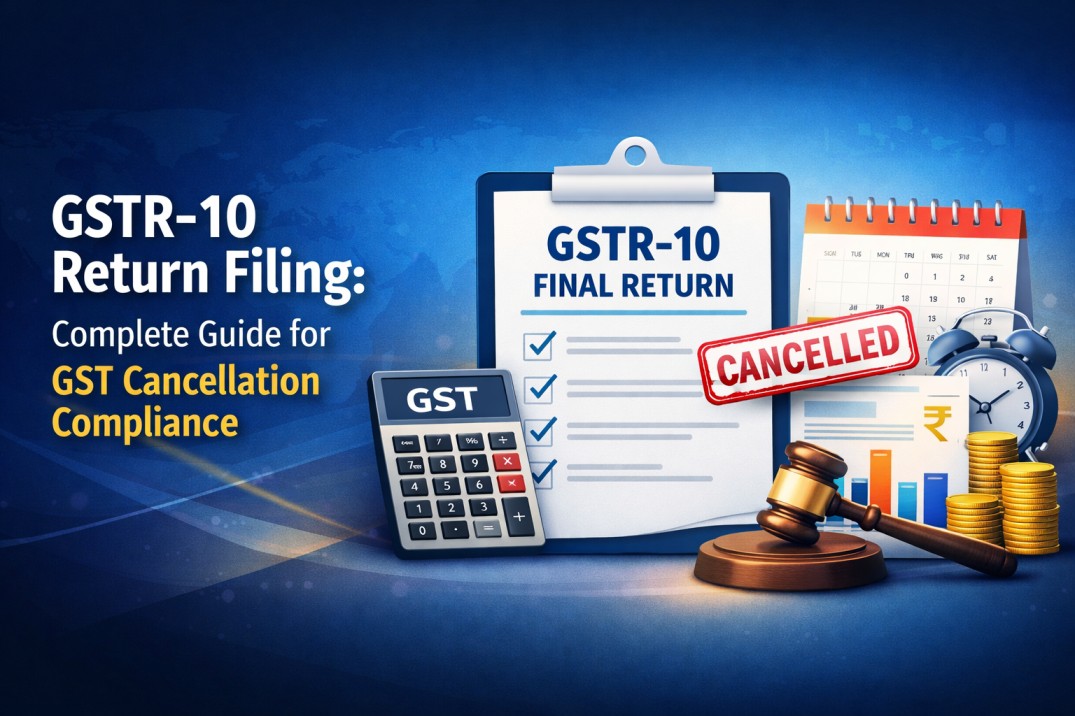
Closing your GST registration? Many taxpayers forget the final compliance step—filing GSTR-10—which can lead to penalties if missed.
WHAT IS GSTR-10 (FINAL RETURN)?
GSTR-10 is a final GST return that must be filed when a taxpayer’s GST registration is cancelled or surrendered. It ensures proper closure of GST obligations and informs authorities about deregistration.
As per GST provisions, GSTR-10 must be filed within 3 months from the date of cancellation.
WHO NEEDS TO FILE GSTR-10?
The following taxpayers are required to file GSTR-10:
- Businesses whose GST registration is cancelled voluntarily
- Taxpayers whose registration is cancelled by GST authorities
- Entities that have surrendered GST registration
Important: Even if no business activity occurred after cancellation, filing GSTR-10 is still mandatory.
LEGAL REFERENCE:
- Section 45 of the CGST Act: Mandates filing of final return after cancellation
- Rule 81 of CGST Rules: Prescribes the format and timeline
TIME LIMIT FOR FILING GSTR-10
- Due Date: Within 3 months (90 days) from the date of cancellation or order of cancellation
- Non-compliance can attract late fees and penalties
DETAILS REQUIRED IN GSTR-10
While filing GSTR-10, taxpayers must provide:
- Basic Information
- GSTIN
- Name and address
- Date of cancellation
- Stock Details
- Inputs, semi-finished goods, finished goods
- Capital goods held on cancellation date
- Input Tax Credit (ITC)
- ITC availed on stock
- ITC reversal details
- Tax Liability
- GST payable on stock
- Any pending liability
- Supporting Documents
- Cancellation order
- ARN of cancellation application
- GST payment challans
WHY IS GSTR-10 IMPORTANT?
- Proper Closure of GST Registration
Filing GSTR-10 ensures your GST account is officially closed with no pending liabilities. - Avoid Penalties
Non-filing attracts penalties and legal notices. - ITC Adjustment
Helps in reversing or paying tax on ITC related to closing stock. - Compliance Rating
Maintains a good compliance record for future registrations or business activities.
LATE FEES FOR NON-FILING
If GSTR-10 is not filed within the due date:
- ₹100 per day under CGST
- ₹100 per day under SGST
- Maximum penalty: 0.25% of turnover
LEGAL REFERENCE:
- Section 47 of CGST Act: Late fee provisions for delayed returns
PRACTICAL EXAMPLE
Suppose a trader cancels GST registration on 1st January.
- Last date to file GSTR-10: 31st March
- If delayed by 10 days → Penalty = ₹2,000 (₹100 + ₹100 × 10 days)
PRACTICAL TIP / CA INSIGHT
Before filing GSTR-10:
- Reconcile your stock and ITC carefully
- Ensure all previous GST returns (GSTR-1, GSTR-3B) are filed
- Pay any pending tax liability
- Keep cancellation documents ready
Mistakes in final return can lead to notices even after closure.
FREQUENTLY ASKED QUESTIONS (FAQs)
Q1. Is GSTR-10 mandatory if no business was done after cancellation?
Yes, filing is mandatory even if there were no transactions.
Q2. Can GSTR-10 be revised after filing?
No, GSTR-10 cannot be revised once submitted.
Q3. What happens if GSTR-10 is not filed?
Late fees apply, and GST authorities may issue notices or initiate recovery proceedings.
Q4. Is ITC reversal required in GSTR-10?
Yes, ITC on closing stock must be reversed or paid.
Q5. Can GSTR-10 be filed after the due date?
Yes, but with applicable late fees and penalties.
CONCLUSION
GSTR-10 is a crucial compliance step when closing your GST registration. Timely filing helps avoid penalties, ensures proper closure, and maintains compliance history. Always review stock, ITC, and liabilities before submission.
For expert guidance on this topic, contact your tax professional today.
Have Questions? We're Here to Help
Get expert advice from AMIT SIDDHI AND ASSOCIATES. Reach out to discuss your requirements.