
15CA & 15CB Filing – Complete Guide for Foreign Remittances in India
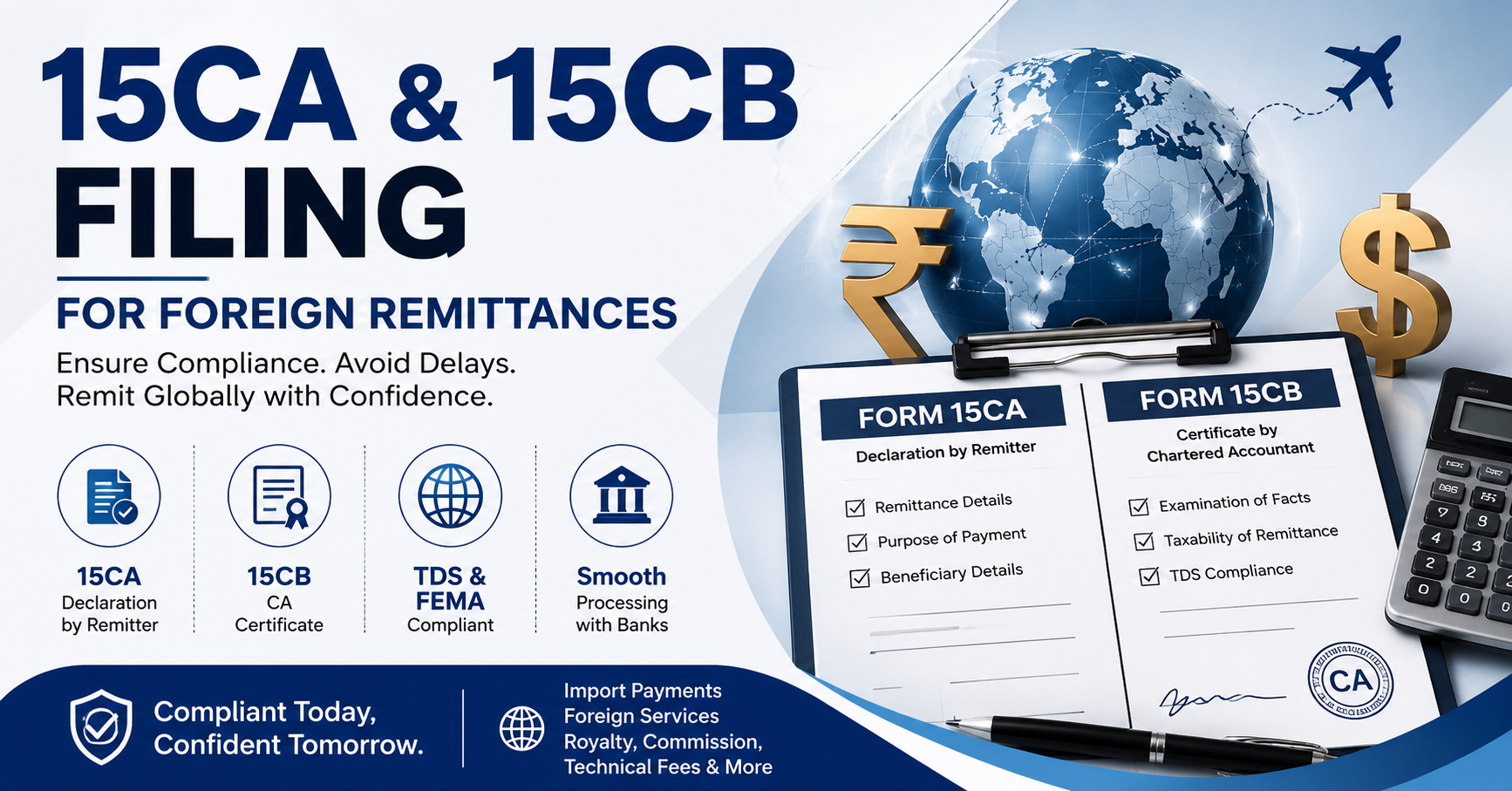
With businesses becoming increasingly global, making payments to overseas suppliers, consultants, service providers, and companies has become a routine part of operations. However, every foreign remittance from India must comply with the applicable provisions of the Income-tax Act and FEMA regulations.
If you are searching in Ghaziabad, Noida, Delhi NCR, or nearby areas for an Income Tax consultant near me, Tax consultant near me, or GST consultant near me to understand foreign remittance compliance, it is important to know the purpose of Form 15CA and Form 15CB before initiating an international payment.
This guide explains what Forms 15CA and 15CB are, when they are generally required, how the filing process works, and why professional assistance can help ensure smooth foreign remittances.
Latest Update
As of today, no major official change has altered the general purpose of Forms 15CA and 15CB. However, taxpayers should always verify the latest Income-tax and RBI requirements before making any foreign remittance, as compliance requirements may change through notifications or circulars.
What is Form 15CA?
Form 15CA is an online declaration submitted by the person making a payment (the remitter) to a non-resident or foreign company. It provides information relating to the foreign remittance and helps ensure that applicable tax compliance requirements are considered before the payment is made.
Banks and authorised dealers may ask for Form 15CA before processing certain international transactions.
What is Form 15CB?
Form 15CB is a certificate issued by a Chartered Accountant in specified cases. It certifies that the proposed foreign remittance has been examined from a tax perspective and that the applicable tax provisions have been considered before making the payment.
The certificate generally includes details relating to:
- Nature of payment
- Amount proposed to be remitted
- Taxability under Indian tax laws
- Applicable TDS provisions, wherever relevant
- Reference to tax treaties, where applicable
Difference Between Form 15CA and Form 15CB
|
Particular |
Form 15CA |
Form 15CB |
|
Filed By |
Remitter |
Chartered Accountant |
|
Purpose |
Declaration of foreign remittance |
Certification of tax compliance |
|
Filing Mode |
Online |
Issued by CA before filing applicable details |
|
Used For |
Reporting foreign remittance |
Certifying tax implications in specified situations |
Why are Forms 15CA & 15CB Important?
Foreign remittances involve both tax and regulatory considerations. These forms help in:
- Promoting tax compliance.
- Reporting payments made outside India.
- Assisting banks in processing eligible foreign remittances.
- Supporting proper deduction of tax where applicable.
- Reducing the possibility of compliance-related issues.
When Can 15CA & 15CB Be Required?
Depending on the nature of the transaction and applicable legal provisions, these forms may be relevant for payments such as:
- Import payments
- Foreign consultancy services
- Technical service fees
- Royalty payments
- Commission paid to overseas agents
- Software licence fees
- Professional services
- Overseas marketing expenses
- International business consultancy
- Foreign contractor payments
The applicability depends on the facts of each transaction and the governing tax provisions.
Documents Commonly Required
While the exact documentation may vary, the following documents are commonly requested:
- PAN of the remitter
- Invoice from the foreign party
- Agreement or contract
- Bank details
- Purpose of remittance
- Tax Residency Certificate (where applicable)
- Relevant supporting documents for the transaction
Step-by-Step Filing Process
Step 1: Review the Transaction
Understand the nature and purpose of the foreign remittance.
Step 2: Determine Tax Implications
Evaluate whether the payment may have tax implications under the applicable provisions.
Step 3: Obtain CA Certification (where applicable)
If required for the transaction, a Chartered Accountant examines the details and issues Form 15CB.
Step 4: File Form 15CA
The remitter files Form 15CA electronically with the required details.
Step 5: Submit Documents to the Bank
The bank or authorised dealer processes the remittance after reviewing the applicable documentation.
Step 6: Complete the Foreign Remittance
Once the compliance requirements are fulfilled, the overseas payment can be processed.
Practical Example
Suppose an Indian software company hires a consultant based in Germany for technical advisory services.
Before making the payment, the company evaluates the tax implications of the transaction. Depending on the applicable provisions and documentation, it may need to obtain the necessary certification and complete the required filing before the bank processes the remittance.
Professional guidance helps ensure that the transaction is completed smoothly while meeting applicable compliance requirements.
Common Mistakes to Avoid
Many taxpayers encounter delays because of avoidable errors such as:
- Incorrect nature of remittance
- Incomplete documentation
- Delayed filing
- Incorrect tax determination
- Not reviewing applicable tax treaty provisions
- Errors in beneficiary details
- Filing incorrect information with the bank
Benefits of Professional Assistance
A tax professional can assist with:
- Understanding foreign remittance requirements
- Reviewing tax implications
- Preparing supporting documentation
- Coordinating the certification process
- Filing the applicable forms
- Addressing bank queries
- Supporting timely compliance
If you are located in Ghaziabad, Vaishali (201019), Indirapuram (201014), Vasundhara (201012), Noida, Delhi NCR, or nearby areas and are searching for an Income tax consultant near me, Tax consultant near me, Income tax services near me, GST consultant near me, or Company registration consultant near me, professional guidance can help simplify the foreign remittance process.
Frequently Asked Questions (FAQs)
1. What is the purpose of Form 15CA?
Form 15CA is used to provide details relating to certain foreign remittances and assist in meeting applicable reporting requirements.
2. What is Form 15CB?
Form 15CB is a certificate issued by a Chartered Accountant in specified situations after examining the tax aspects of a proposed foreign remittance.
3. Is Form 15CB required for every foreign payment?
No. The requirement depends on the nature of the transaction and the applicable legal provisions.
4. Can an individual require Form 15CA?
Yes. Depending on the type of foreign remittance and applicable regulations, individuals as well as businesses may need to comply with the relevant requirements.
5. What types of payments commonly involve these forms?
Examples include import-related payments, consultancy charges, royalty, commission, technical fees, software licensing, and other overseas business payments, depending on the applicable provisions.
6. Why should I consult a professional?
Foreign remittance compliance often involves tax provisions, documentation, and banking requirements. Professional assistance helps minimise errors and delays.
Conclusion
International payments require careful attention to tax and regulatory compliance. Understanding the purpose of Forms 15CA and 15CB helps businesses and individuals prepare the necessary documentation before making eligible foreign remittances.
Whether you are making payments for imports, consultancy, royalty, commission, or technical services, understanding the compliance process can save time and reduce unnecessary delays. If you are searching for Tax consultant near me, Income tax consultant near me, GST services near me, Company registration services near me, or Trade Mark consultant near me in Ghaziabad, Noida, Delhi NCR, or nearby areas, obtaining professional guidance can help ensure a smooth and compliant foreign remittance process.
For expert guidance on this topic, contact your tax professional today.
Disclaimer
This content is for educational and knowledge purposes only. The applicability of Form 15CA and Form 15CB depends on the facts of each transaction and the prevailing legal provisions. For verification and applicability to your case, please consult your tax professional.
Have Questions? We're Here to Help
Get expert advice from AMIT SIDDHI AND ASSOCIATES. Reach out to discuss your requirements.